HUR Strength Training and Isometric Strength Testing in Axminster
If you’re looking for a more accurate, objective way to measure strength and guide rehabilitation, our HUR strength and testing systems allow us to do both: test properly, then train with a clear plan.
At East Devon Physical Therapy (Axminster, EX13 5PQ), we use HUR as part of an evidence-informed approach: assessment first, then the right combination of treatment and progressive strength work so you get meaningful change — not vague “it feels a bit better”.
HUR strength training (built for rehabilitation)
HUR is designed for rehabilitation and medical environments, where we want strength work that is:
- safe and controlled
- progressive (small, sensible steps)
- repeatable (so we can build consistency) appropriate for a wide range of ages, abilities, and rehab stages
Pneumatic air resistance (Plain English)
Unlike traditional gym machines that use weight stacks, HUR uses pneumatic air pressure to create resistance.
That matters because air resistance can feel:
- smoother and more controlled through the full range of movement
- more joint-friendly (less reliance on momentum or “clunky” loading)
- easier to match to your current ability, especially early in rehab
- easier to progress in small, sensible increments — which is often what makes rehab successful long-term
- We still train hard when it’s appropriate — but the goal is to make strength work safer, more repeatable, and better tolerated, so you can keep building week to week.
What is isometric strength testing?
Isometric strength testing measures how much force you can produce without moving the joint (a static contraction).
That’s useful in rehab because it can help us:
- establish a clear baseline (where you’re starting from)
- compare left vs right (or injured vs non-injured side)
- track progress over time with repeatable numbers
- guide return-to-work / return-to-sport decisions with more confidence
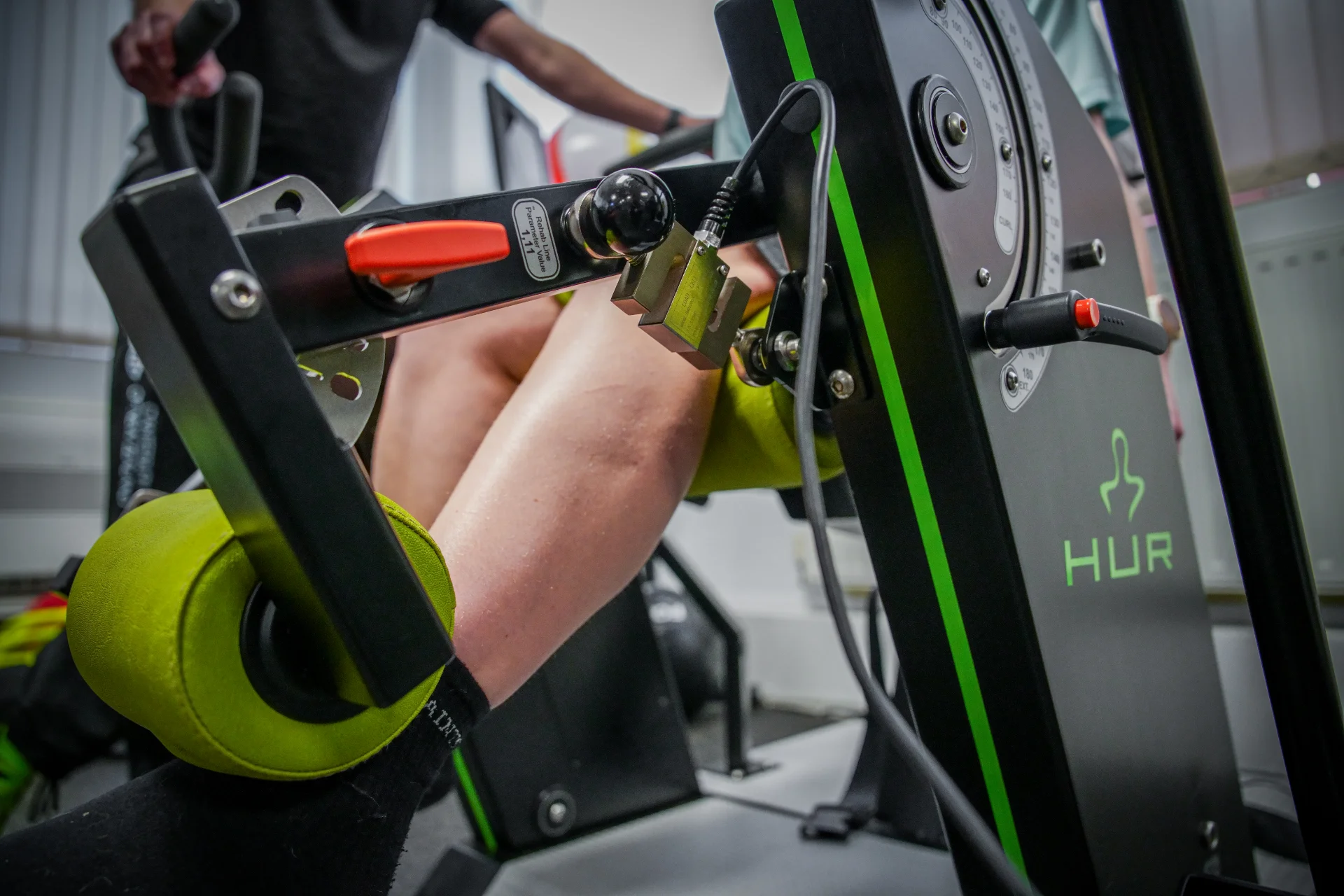
Why a seated, fixed testing machine matters (Plain English)
A lot of strength testing in clinics is done with small handheld devices. They can be useful — but the results can change depending on:
- the therapist’s strength and ability to “hold” the test
- the exact joint angle used
- the lever length and positioning
- how stable you are during the test
- small differences in setup between sessions
- With a proper seated machine, your position is stabilised and the setup is consistent. That means the measurement is more about your strength and less about the tester, the angle, or the “feel” of the moment.
- This is one of the reasons we use HUR systems for isometric testing: it’s designed to make testing more accurate, repeatable, and clinically useful.
What we use HUR testing and training for
HUR-based strength training and isometric testing can be helpful for a wide range of rehab and performance goals, including:
- knee and hip rehab (including post-op)
- tendon rehab (when we need a clear loading plan)
- persistent pain cases where confidence and objective progress matter
- return to running / sport decision-making
- falls prevention and strength reconditioning
- neurological rehab where consistency and safety are key
If you’re not sure whether strength testing is appropriate for you, we’ll talk it through and keep it relevant — not “testing for the sake of testing”.
What happens in an appointment?
Typically, we will:
- Start with an assessment (your symptoms, goals, medical history, movement, and what’s limiting you)
- If appropriate, complete baseline strength testing in a controlled seated position
- Explain what the numbers mean in plain English (and what we’ll do about them)
- Build a plan: targeted strength work + rehab progressions
- Re-test at appropriate points to confirm you’re moving forward
- You don’t need to be “strong already” to do this — the whole point is to meet you where you are and progress safely.
Evidence-led care (Not hype)
You’ll see a lot of gym-style messaging around testing and strength tech. Our approach is simple:
- testing should be reliable and repeatable
- numbers should change your plan, not just look impressive
- strength work should be appropriate for your stage of rehab
- the goal is always function: walking, stairs, sport, work, confidence — not just a score
If HUR testing and training isn’t the right tool for your situation, we’ll tell you honestly and recommend a better approach.
HUR training and testing near you (East Devon, Dorset & Somerset)
HUR strength training and isometric testing are available at our Axminster clinic, and we regularly help patients travelling from Seaton, Lyme Regis, Honiton, Sidmouth, Chard, Exeter, Bridport, Yeovil, Dorchester and Taunton.