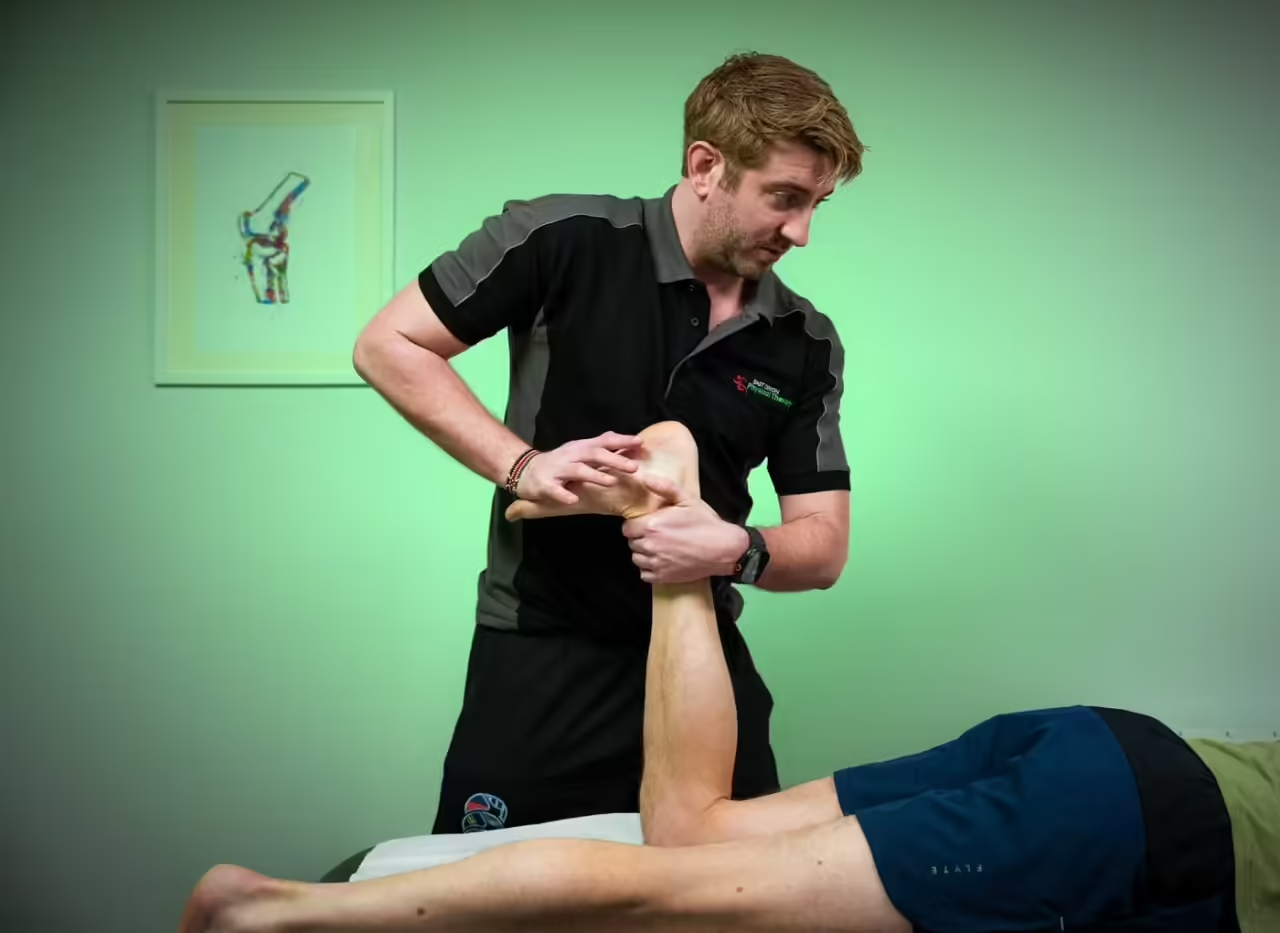
Foot and Ankle Issues
- Achilles pain / Achilles tendinopathy
- Ankle sprain
- Heel pain
- Peroneal tendinopathy
- Posterior tibial tendon dysfunction
- Morton’s neuroma
At East Devon Physical Therapy, we help people with foot and ankle problems reduce pain, restore movement, and rebuild strength so they can walk, run, train, and live more comfortably.
Foot and ankle pain can affect every step you take. Whether symptoms started gradually or after a specific injury, these problems can quickly interfere with work, exercise, sport, and day-to-day life. Our role is to assess properly, explain clearly, and build a treatment plan that helps you make steady, meaningful progress.
Common foot and ankle problems we treat
- Achilles pain and Achilles tendinopathy: Achilles problems often cause pain and stiffness at the back of the heel or lower calf, especially first thing in the morning, after rest or during running and walking.
- Ankle sprain: Ankle sprains are common after twisting injuries and can lead to pain, swelling, reduced confidence, stiffness and repeated instability if not rehabilitated properly.
- Peroneal tendinopathy: This can cause pain on the outside of the ankle or foot, often made worse by walking, running, uneven ground or sporting activity.
- Posterior tibial tendon dysfunction: This problem can cause pain on the inside of the ankle and foot, weakness in the arch and difficulty tolerating walking or standing.
- Morton’s neuroma: Morton’s neuroma often causes burning pain, tingling or the feeling of walking on a pebble in the forefoot, commonly between the toes.
Common symptoms of foot and ankle issues
- Pain with walking, running or standing
- Stiffness first thing in the morning or after rest
- Swelling around the foot or ankle
- Weakness or reduced push-off strength
- Pain going up or down stairs
- Difficulty with balance or uneven ground
- Reduced confidence after an ankle injury
- Burning, tingling or sharp pain in the foot
- Symptoms that flare with sport or repeated loading
Not all foot and ankle pain is the same, which is why a detailed assessment is important.
Our approach to foot and ankle treatment
At East Devon Physical Therapy, we do not just focus on the painful area.
We look at how the foot and ankle are moving, how well the tissues are tolerating load, what is aggravating symptoms, and what needs to change to help recovery.
Your treatment plan may include:
- A detailed foot and ankle assessment
- Clear diagnosis and explanation
- Advice on activity modification and load management
- Manual therapy where appropriate
- Mobility work to improve movement
- Targeted exercises to improve strength, control and tolerance to load
- Rehabilitation for walking, running, work and sport
- Balance and stability training where needed
- Advice on footwear and training load where relevant
- PBM laser therapy where clinically appropriate to help calm irritation and support recovery
Our aim is to reduce pain, improve function and help you move with more confidence again.
Why foot and ankle problems can linger
Foot and ankle issues often persist when pain changes the way you move, strength and control are reduced, or the tissues are not reloaded in the right way.
Rest alone may help temporarily, but if the underlying problem is not addressed, symptoms often return when activity increases again.
That is why effective treatment is not just about settling pain. It is about restoring strength, movement, control and resilience over time.
Why choose East Devon Physical Therapy?
We combine expert clinical assessment with practical, evidence-based rehabilitation tailored to the individual.
Some people need help settling an irritated tendon.
Others need a structured rehabilitation plan after an ankle sprain, support returning to running, or help managing persistent foot pain that has not improved elsewhere. We adapt treatment to the person in front of us rather than using a one-size-fits-all approach.
Our team focuses on honest advice, clear explanation and meaningful long-term improvement.
Common goals we help with
People often come to us because they want to:
- Reduce foot or ankle pain
- Walk more comfortably
- Return to running or sport
- Improve strength and stability
- Feel more confident on uneven ground
- Reduce flare-ups and repeated injuries
- Get back to work and daily activity with less discomfort
What to expect
Your first appointment gives us time to understand your symptoms, assess your foot and ankle properly and identify the key factors contributing to the problem.
We will explain what we think is going on, what is likely to help and how to start moving things forward.
You will leave with a clear plan, not vague advice or generic exercises.